
Disclosure: This post contains affiliate links. I may earn a commission from qualifying purchases. It comes at no extra cost to you and helps me create more free content!
The manual pressure cooker: My dad first introduced me to this piece of equipment when I was young. The noisy, rhythmic hissing and rattling that went on for almost an hour filled our home. The first recipe I tried was bulalo (beef marrow stew): the meat was so tender it fell right off the bone, and the broth was incredibly rich and full of flavor.
For decades, I relied on using the heavy stainless-steel manual pressure cooker. It always got the job done when it came to tenderizing tough and chewy cuts of meat. What would typically take hours of simmering on the stove could be done in minutes to about an hour with this equipment.
But I always had one challenge: cooking chicken feet adobo. Whenever I cooked it, there was always too much soup. I like my adobo dry, boiled until oil and a thick, tasty sauce remain. I tried pouring less water than the recipe called for, but it would dry out too fast, and I’d end up with burned chicken feet. A manual pressure cooker needs a lot of liquid to generate pressure, and much of the water vapor escapes through the nozzle, so reducing the water didn’t work.
So for years, I settled for manually drying the sauce after pressure cooking—boiling and evaporating the liquid until I finally reached the consistency I wanted.
Then I discovered a new piece of equipment: the digital (electric) pressure cooker. It doesn’t release water vapor, so it doesn’t dry up. Now I can cook my chicken feet exactly the way I like them—dry, sticky, and with a thick, flavorful sauce. It’s entirely silent and doesn’t fill the house with noise. It has a timer (a true set-it-and-forget-it feature), and beyond pressure cooking, it can do a lot more: it works as a rice cooker, steamer, slow cooker, and more, replacing several appliances at once. However, it has one drawback: the pressure isn’t as intense as that of the big manual cooker. As a result, you need to extend the cooking time to achieve the same level of tenderness you’d get with a traditional stovetop pressure cooker.
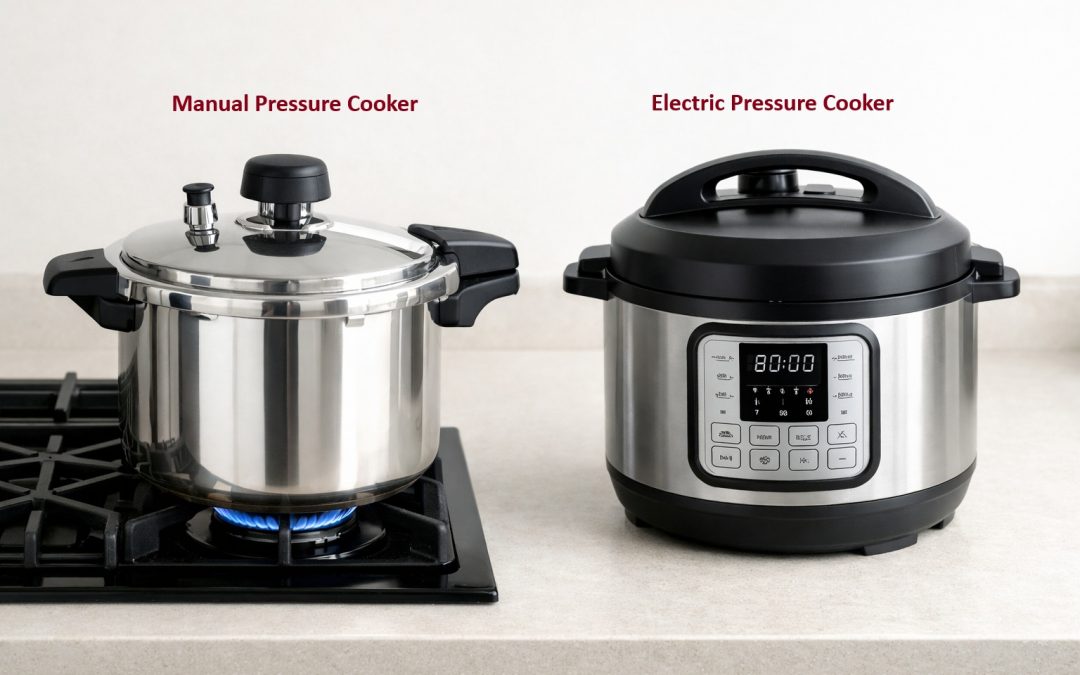
Manual vs Electric Pressure Cooker at a Glance
Over time, cooking with both types of cookers taught me their strengths and weaknesses. So if you’re wondering which one to bring into your own kitchen, here’s how they really compare.
| Feature | Manual (Stovetop) Pressure Cooker | Electric (Digital) Pressure Cooker |
|---|---|---|
| Heat Source | Uses your stovetop burner (gas, electric, induction). | Has its own built-in heating element. |
| Typical Pressure Level | Often reaches around 15 PSI (higher pressure). | Usually slightly lower than 15 PSI. |
| Cooking Speed | Faster at maximum pressure; ideal when you want the absolute shortest cook times. | Slightly longer, but still much faster than conventional simmering. |
| Control | No controls, direct control over heat via your stove burner. | Automated programs and timers; minimal babysitting. |
| Searing/Browning | Excellent sear on meats when used directly on high heat before locking the lid. | Has a sauté function, but usually doesn’t get as hot as a stovetop pan. |
| Noise Level | Loud hissing and rattling; can be intimidating for beginners. | Quieter, with controlled steam releases; more beginner-friendly. |
| Functions | Mainly pressure cooking (and basic boiling/simmering like a regular pot). | Multi-function: pressure cooker, rice cooker, steamer, slow cooker, yogurt maker (varies by model). |
| Storage | Pot and lid are relatively compact, making them easier to store in a cabinet. | A bulkier countertop appliance that needs more space. |
| Durability | Very durable; no electronics, fewer parts to fail. | More electronic parts and sensors that can eventually wear out. |
| Learning Curve | Pressure canning, fast cooking, deep searing, and simple long-term durability. | More “plug-and-play” with presets and automatic pressure control. |
| Best Use Cases | Pressure canning, fast cooking, deep searing, simple long-term durability. | Busy weeknight meals, multi-function cooking, less water cooking, and set-it-and-forget-it convenience. |
I recommend buying both, but if you are on a budget, I highly recommend the digital pressure cooker.
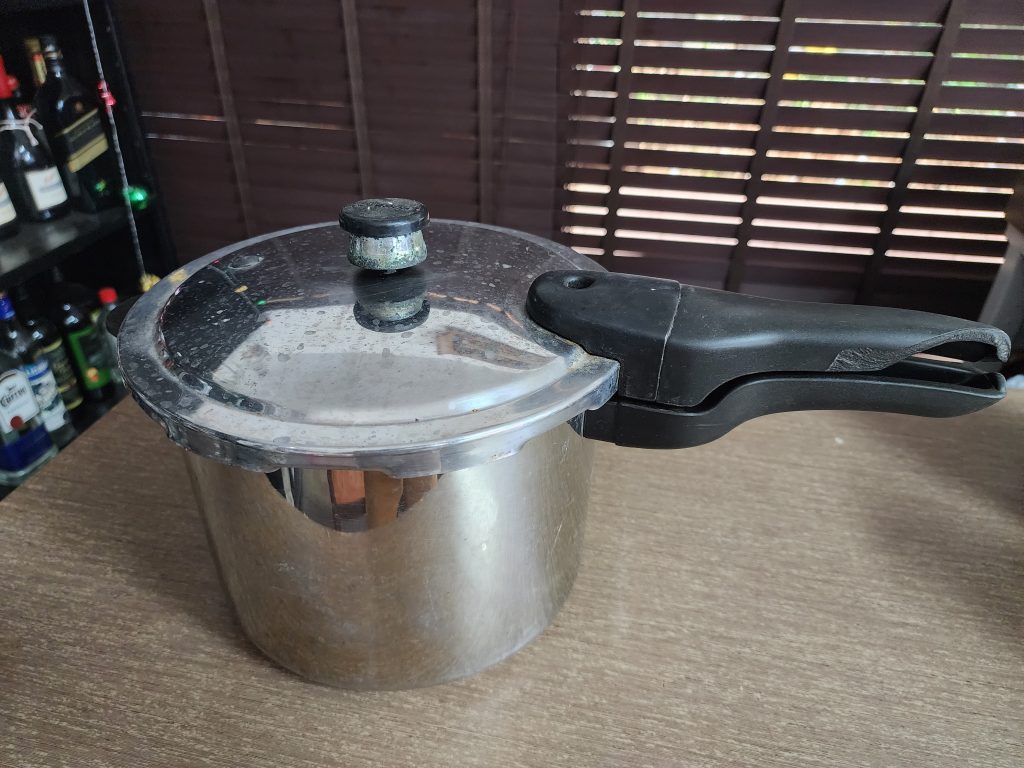
The Classic: The Manual (Stovetop) Pressure Cooker
This is the original. A heavy-duty pot with a locking lid and a weighted valve on top that controls the pressure. It sits directly on your stovetop burner and responds instantly to changes in heat.
Pros
- Higher Pressure & Faster Cooking
Manual cookers typically reach a higher pressure level (around 15 PSI) than most electric models. This means they cook even faster and are the gold standard for tasks like pressure canning, which requires that specific pressure level. - More Control and Better Searing
Because it’s on your stovetop, you have direct control over the heat. You can get a much harder, more effective sear on meats before you lock the lid, which builds a deeper flavor foundation for stews, braises, and dishes like Bulalo. - Durability and Longevity
A good quality stainless-steel stovetop cooker is a “buy it for life” tool. With no electronic parts to fail, it’s a simple, robust machine that can last for decades. - Easier to Store
With no bulky electronic base, the pot is easier to store in a cabinet, and the lid can be stored separately.
Cons
- Requires Babysitting
This is not a set-it-and-forget-it appliance. You have to monitor the heat, bring it to pressure, lower the flame, and keep an ear out while it’s cooking. You really do need to stay in or near the kitchen. - The Fear Factor
The hissing, steaming, and rattling can be intimidating for beginners. Even though modern manual cookers have multiple safety features, they feel more “active” and can cause some anxiety. - Manual Pressure Release
You are responsible for releasing the pressure, whether that’s a quick release (depending on the model) or letting it come down naturally. It requires a bit of know-how and attention to the recipe.
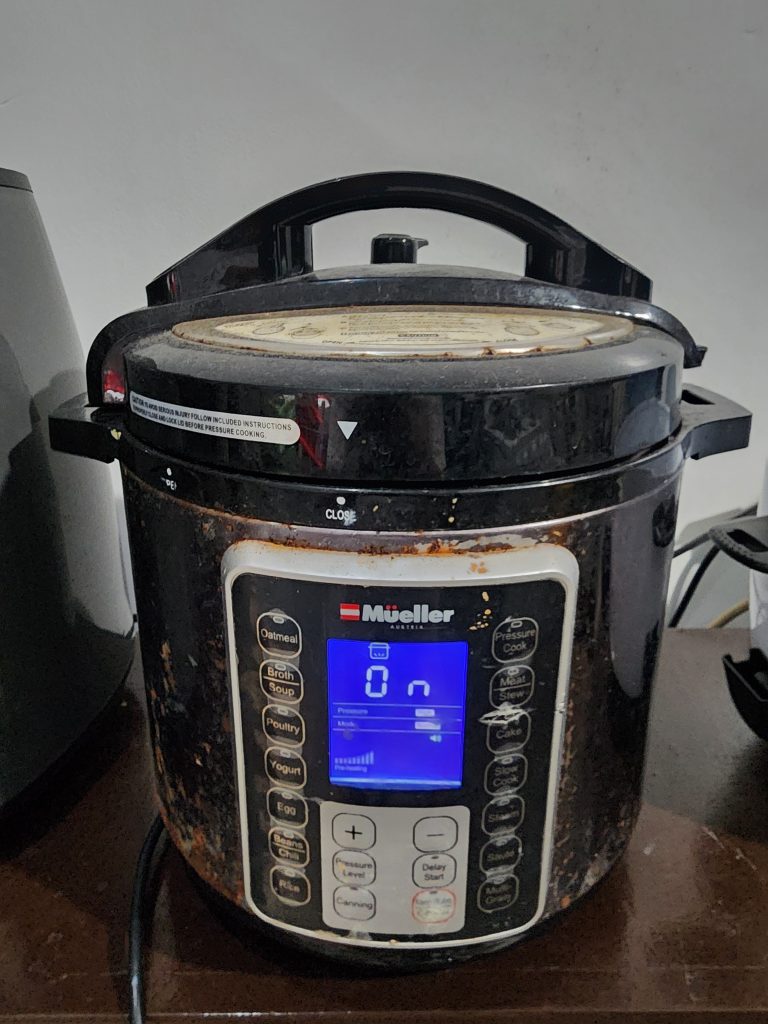
The Modern Contender: The Electric (Digital) Pressure Cooker
This is a self-contained countertop appliance with its own heating element and a digital control panel.
Pros
- Set-It-and-Forget-It Convenience
This is its most significant selling point. You add your ingredients, lock the lid, press a button for “Poultry,” “Bean/Chili,” or your chosen setting, and walk away. The machine handles everything—coming to pressure, cooking for the programmed time, and then switching to “Keep Warm.” - Multi-Functionality
It’s more than just a pressure cooker. Most models can also sauté, slow cook, cook rice, make yogurt, and steam. This can save counter and storage space by replacing several other appliances. - Quieter and Less Intimidating
There’s no loud, constant hissing or rattling. It releases a bit of steam at specific points, but the whole process is much quieter and calmer, making it very beginner-friendly. - Safety Features and Automation
With its locking lid, sensors, and built-in programs, it’s hard to misuse. The automated pressure management and timing remove much of the guesswork and fear.
Cons
- Lower Pressure & Slightly Slower Cooking
Most electric models cook at a slightly lower pressure than 15 PSI. This means cook times can be a little longer than with a stovetop model, though still much faster than conventional stovetop cooking. - Weaker Searing Function
The “Sauté” function works, but it doesn’t get as hot as a heavy pot on a strong burner. The sear on meats is often less intense, so you may not get as deep a browning. However, you can place the pot on a stove burner and put it back once you’re done searing. - Bulky and Heavy
It’s a large countertop appliance that takes up space both on your counter and in your pantry or cabinet. - More Parts to Fail
With an electronic panel, sensors, and a more complex lid, more components can potentially break down over time than in a simple manual cooker. - Manual Pressure Release
Depending on the recipe or how tender you would like the meat, you need to release the pressure manually to completely stop the cooking process. I accidentally turned a beef stew into corned beef because I just let it cool on its own. Keep in mind that there is still pressure while the equipment is cooling down.
The Verdict: Which One Should You Buy?
After all my years in the kitchen, my honest answer is this: the better choice depends entirely on the kind of cook you are, what you are cooking, and your daily routine and lifestyle.
If you are on a budget, I highly recommend the digital pressure cooker.
You should choose a MANUAL (stovetop) pressure cooker if:
- You are a hands-on cook who loves control and doesn’t mind staying near the stove.
- You want the best possible sear and flavor in your meat before pressure cooking.
- You prioritize maximum speed and efficiency and want the absolute shortest cook times.
- You are interested in pressure canning and need that full 15 PSI.
- You’re short on counter space but have cabinet space for a pot and lid.
- You prefer durable, lifelong tools with no electronics to fail.
You should choose an ELECTRIC (digital) pressure cooker if:
- You are busy and value convenience above all. You want to start dinner and then walk away to do something else.
- You’re new to pressure cooking and feel intimidated by hissing valves and the need for active monitoring.
- You want to declutter your kitchen with a single appliance that can also serve as your slow cooker, rice cooker, and more.
- You cook for a family and love the “Keep Warm” feature, so dinner is ready whenever everyone is.
- You want to tenderize meat with less water and prefer thicker or drier sauces, like my dry-style chicken feet adobo.
For my kitchen, I keep both. I pull out my trusty heavy-duty stovetop model for canning and for stews where a deep, dark sear is essential. But on a busy weeknight, when I need to get a good meal on the table without hovering over the stove, I’m incredibly grateful for the set-it-and-forget-it magic of my electric cooker.
Think about your daily routine, your cooking style, and what you value most. Once you do that, choosing the right pressure cooker for your kitchen becomes much easier.