
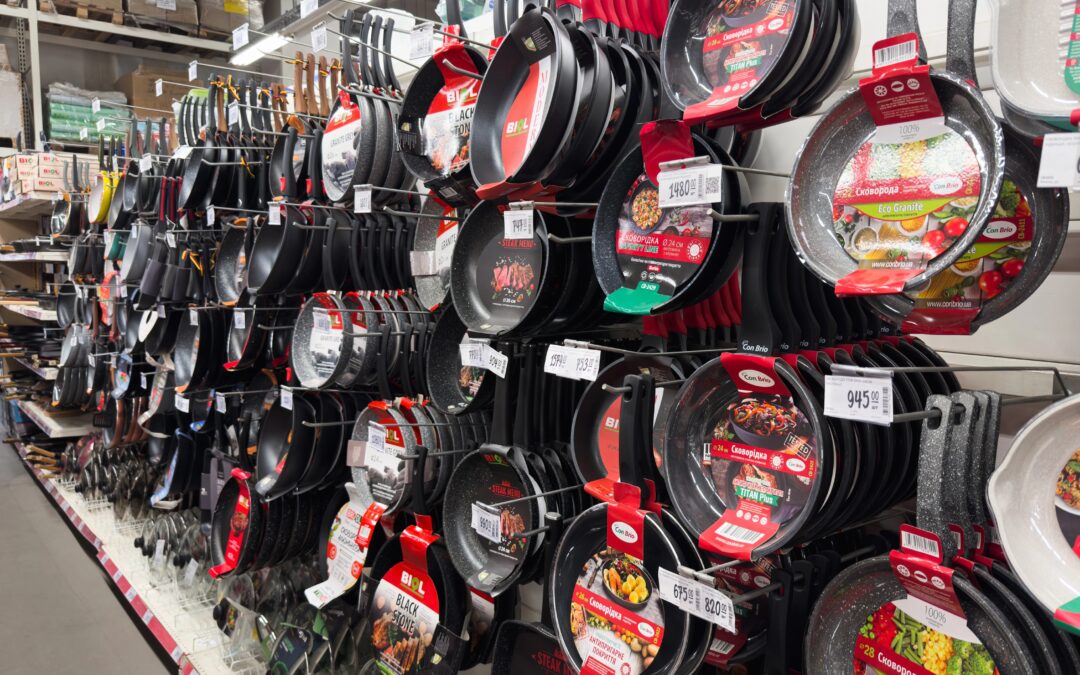
Frying in pans made of iron, steel, and aluminum was challenging during my early years of cooking.
I won’t forget the first time I fried Tilapia fish in an aluminum wok (kawali). When I flipped it, half of the fish stuck to the pan, and the other half stuck again when it landed back in the wok. I ended up with shredded fish and bones; it was a frustrating experience.
It was a game-changer when I started using non-stick coated pans. I could cook eggs and fish, flip them over and over without the worry that they will stick to the metal.
But non-stick pans are delicate and should be handled with care. Below are lists of practices that will destroy your pan’s coating.
1. Overheating the Pan
Almost all non-stick pans were designed to be used from low to “medium‑high” heat, but people who are unaware of this treat them like cast iron and crank them up to high heat as soon as the pan lands on the stove.
This will warp the base metal, and as it expands unevenly, heat will soon concentrate in certain spots instead of spreading evenly. Over time, this will damage the non-stick coating.
2. Washing a very Hot Pan
Compared with overheating, the opposite happens when you suddenly splash cold water on your hot pan. A sudden change in temperature (from hot to cold tap water) subjects the pan to stress, making it contract in unnatural ways.
Over time, this contraction will damage the non-stick coating, causing it to separate from the metal and flake off.
I used to do this a lot, thinking it would not affect the non-stick coating, until one day, my Teflon pan started flaking, and soon food started sticking.
These two habits are the main culprits in damaging non-stick coatings. A single episode of overheating or washing a hot pan won’t ruin it overnight. But repeated cycles of very high heat followed by rapid cooling will gradually deform the pan and put constant stress on the coating.
3. Using Metal Utensils and/or Sharp Tools
Obviously, you shouldn’t use metal utensils or sharp tools on your non-stick pan. Even if you use them lightly, the scraping will scratch and chip the delicate coating, causing it to lose its non-stick feature.
Instead of using metal utensils, use wood or silicone utensils. Also, avoid using plastic utensils on very high heat. They can melt, leaving residue on the pan and potentially leaching chemicals into your food.
4. Use of Dishwashers
Most current non-stick pans are labeled “dishwasher safe.” But this doesn’t necessarily mean it won’t damage the pan’s coating. Here are three reasons not to use dishwashers on your non-stick pans.
Temperature Fluctuations and Long Cycles. Dishwashers cycle through different temperature between hot and cold water, this adds the same stress that warps the pan on the stove top.
Harsh Alkaline Detergents. Dishwashing soaps or pods are chemically aggressive. Over time, it will dull and damage the non-stick coating, making it brittle and flaky.
Physical Contact of Coating. The coating of the pans is susceptible to scratches from other pans or rack wires during the cycle.
5. Store Pans Correctly
I once called the attention of our house cleaner to not stack pans together. I explained that stacking them will scratch the coating and damage the pan. So I showed her the right way to place them in the cabinet separately to avoid unnecessary scratches. If you are tight on space and need to stack them, place a protective layer between the pans. You can use paper towels, dishcloth, parchment paper, or anything that will prohibit scratching.
How to Protect and Extend a Non-Stick Pan’s Life
If you want to extend the life of your non-stick pan, as much as possible, protect the metal and the coating. Please follow the list below.
Use low to medium heat for most tasks
Preheat gently on medium heat and avoid preheating an empty pan on full power. For searing or using high heat, this is suited for stainless steel, aluminum, cast iron, or carbon steel pans.
Let the pan cool before washing
Let the pan sit to cool before washing. Don’t immediately splash water while it’s very hot.
Don’t use metal utensils
Use wood or silicone utensils. Avoid metal, especially for scraping and flipping, even if the manufacturer guarantees its safety.
Avoid Using the Dishwasher
Avoid using the dishwasher whenever possible. Even if it’s labeled as “Dishwasher Safe.” High and low water temperature, long cycles, knocking around and agressive detergents will stress the pan’s metal and coating. Over time, it will ruin its non-stick capability, and the coating will flake off. Hand-washing may take a minute or two, but it will add months or years to your pan.
Don’t Stack Pans Together or Use Protection Between Them
Rubbing one another damages the non-stick coating. So place the pans separately, or place a protective layer between them if you’re short on space. The best way is to hang them.
Chemical & Structural Breakdown of the Coating
Non-stick pans are not meant to last a lifetime, even if you take care of them well. Daily or continuous use will eventually degrade the pan’s non-stick feature.
The average life of a pan ranges from 1 to 5 years. But by following the preventive care listed above, you can maximize its lifespan and keep it serving you longer.